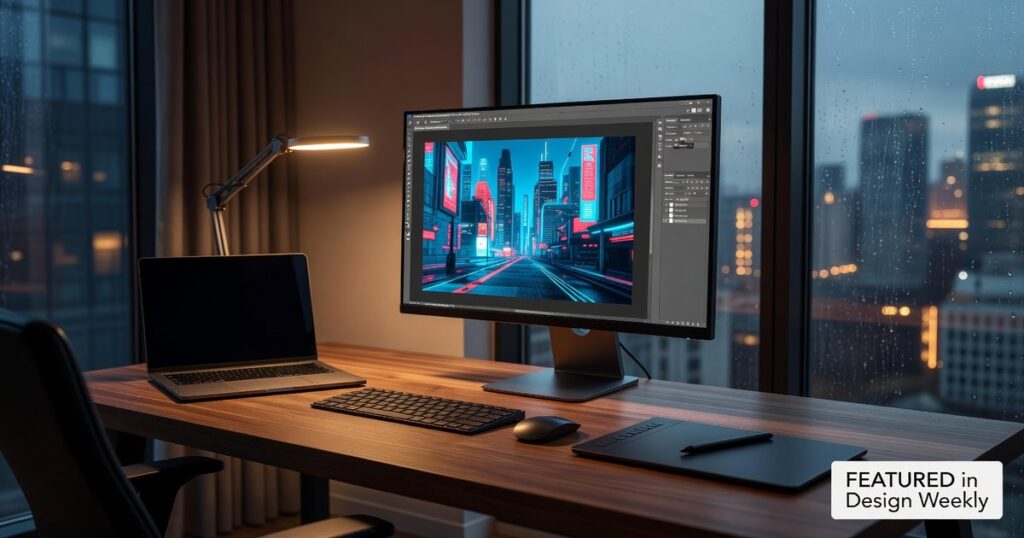
I’ve spent years watching people struggle with Photoshop because they jump straight into tools without understanding workflow.
You probably know Photoshop can create amazing things. But when you sit down to actually make something, your files get messy and the results don’t match what you pictured.
Here’s the real issue: it’s not about knowing every tool. It’s about having a process.
I’m going to walk you through a complete project from start to finish. Not random tips or scattered tutorials. A real workflow that takes you from blank canvas to finished digital art.
This is how professionals work. We use non-destructive techniques that keep your files clean and let you make changes without starting over. (Trust me, you’ll thank yourself later when you need to adjust something.)
GFXProjectality focuses on practical workflows that actually work in real projects. Not theory. Not shortcuts that break down when things get complex.
You’ll see exactly how to structure your project, which tools to use when, and how to keep everything organized so you’re not fighting Photoshop the whole way.
By the end, you’ll have a polished piece ready for any digital platform. And more importantly, you’ll have a process you can use again and again.
Phase 1: The Blueprint – Setting Up Your Project for Success
You know what’s funny?
Most people spend hours fixing a design that could’ve been perfect in two minutes. They just started with the wrong settings.
I’ve done it myself. Built an entire poster at 72 DPI only to realize I needed to print it. (That was a fun conversation with the print shop.)
Here’s the truth. Your foundation matters more than you think.
Choosing Your Canvas
Let me break this down real quick.
For web stuff? Stick with 72 DPI. Social media posts, website graphics, digital ads. That’s your sweet spot.
For print? You need 300 DPI minimum. Business cards, posters, anything physical. Trust me on this one.
The dimensions change based on what you’re making. Instagram posts work best at 1080×1080 pixels. Web banners? Usually 728×90 or 1200×628 depending on where they’re going.
The Color Space Thing
This trips people up constantly.
RGB is for screens. Your monitor, your phone, anything with pixels. When you’re working on photoshop gfxprojectality projects for digital use, RGB is your friend.
CMYK is for print. Period.
Pick the wrong one and your colors will look completely different when you’re done. That bright blue you loved? It’ll print as purple if you mess this up.
Setting Up Your Workspace
Here’s what I do:
- Keep Layers panel on the right where I can always see it
- Properties panel right below that
- Brushes panel tucked away but accessible
You’ll find your own rhythm. Just make sure you can reach everything without hunting through menus every five seconds.
Pro tip: Save your workspace layout once you’ve got it dialed in. You can load it back up anytime Photoshop decides to rearrange everything on you.
Phase 2: Building the Core – Mastering Layers and Composition
Here’s what separates beginners from people who actually know what they’re doing in Photoshop.
Layers.
I’m serious. If you’re still working directly on your background layer, you’re making your life harder than it needs to be.
Never touch your background layer. That’s the golden rule. I don’t care if you’re just doing a quick edit or testing something out. The moment you start painting or erasing on that background, you’ve locked yourself into decisions you can’t undo. In the realm of digital art, adhering to the principle of “never touch your background layer” is a crucial aspect of Gfxprojectality, as it allows artists to retain the flexibility needed to explore their creative visions without the risk of irreversible mistakes.
Some designers say layers make projects too complicated. They argue that keeping things simple means fewer headaches.
Wrong.
What actually creates headaches? Realizing you need to change something from three steps ago and discovering you can’t because you flattened everything. (I’ve been there. It’s not fun.)
Smart Objects are your best friend. When you convert a layer to a Smart Object, you can scale it down, rotate it, apply filters, and the original quality stays intact. You’re not committing to anything permanent.
That’s the whole point of a non-destructive workflow. You keep your options open.
Before I jump into the details of a design, I do something most tutorials skip. I sketch out the composition using basic shapes and a low-opacity brush. Nothing fancy. Just blocking out where the main elements will go.
Think of it like photoshop gfxprojectality planning. You wouldn’t build a house without a blueprint.
Layer organization saves you hours. Name your layers. Group them into folders like ‘Background,’ ‘Subject,’ and ‘Text.’ When you’re 50 layers deep into a project at 2am, you’ll thank yourself for this habit.
Trust me on that one.
Phase 3: The Artistic Touch – Brushes, Textures, and Blending
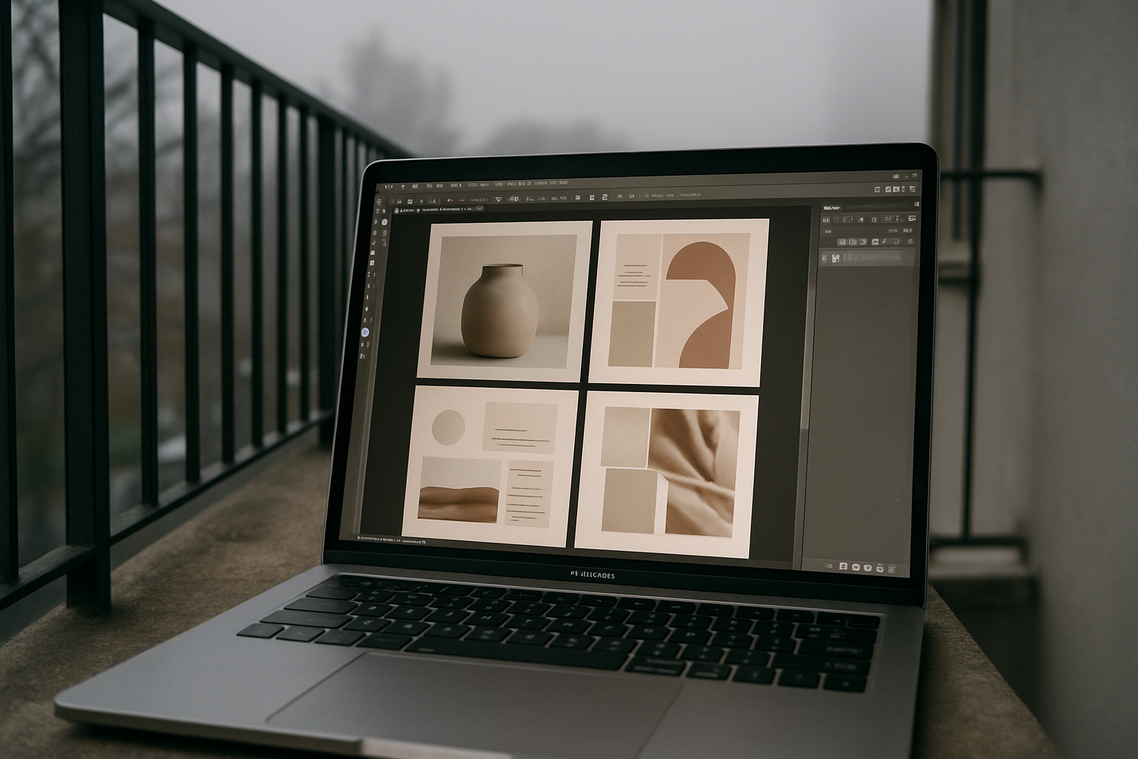
You’ve got the basics down. You can make selections and adjust colors.
Now comes the fun part.
This is where your work stops looking like everyone else’s. Where you start building your own style instead of following tutorials step by step.
I’m talking about brushes, textures, and blending modes. The tools that separate okay work from stuff that makes people stop scrolling.
Beyond the Default Brush
Photoshop ships with decent brushes. But they’re the same ones everyone else uses.
You want custom brushes. They’re free, easy to install, and they’ll change how your work looks immediately.
Here’s what you do. Find brush packs online (sites like Brusheezy or DeviantArt have thousands). Download the ABR file. Then in Photoshop, click the Brush tool, open the brush panel, and hit the menu icon to import.
I organize mine by type. Watercolor in one folder, grunge in another, charcoal effects separate. Makes it easier when you’re working fast.
Essential Brush Settings
Three settings control everything about how your brush behaves.
Opacity determines how see-through each stroke is. At 100%, it’s solid. At 30%, you can see through it. I use lower opacity when I want to build up color gradually.
Flow controls how much paint comes out. Think of it like pressing harder or softer on a real brush. Lower flow gives you more control for subtle work.
Hardness sets how soft the edges are. A hard brush has crisp edges. A soft brush fades out. Most of my work happens between 0% and 50% hardness because hard edges look fake.
These three settings working together? That’s how you get natural-looking effects in photoshop gfxprojectality projects.
The Magic of Blending Modes
Blending modes change how layers interact with what’s underneath them.
You’ll use four modes more than all the others combined.
Multiply darkens everything. Great for shadows or making colors richer. I use it constantly when adding depth to flat images.
Screen does the opposite. It lightens. Perfect for highlights or creating glow effects.
Overlay increases contrast. It makes darks darker and lights lighter while keeping mid-tones mostly the same. Use it when you want punch. To achieve that striking visual punch with your overlays, mastering “How to Use Guides in Photoshop Gfxprojectality” can significantly enhance your workflow and ensure your contrasts pop just right.
Soft Light is like Overlay’s gentler cousin. It adds contrast without going overboard. My go-to for subtle texture overlays.
Practical Example: Adding Grunge Texture
Let me show you how this works in practice.
Start with a solid color background. Any color works, but let’s say it’s a flat blue.
Find a grunge texture (concrete, scratched metal, whatever). Drag it into your document as a new layer above your background.
Right now it probably looks terrible. That’s normal.
Change the blending mode of your texture layer to Overlay. Watch what happens. The texture now interacts with the blue underneath instead of covering it completely.
Still too strong? Drop the opacity of the texture layer to around 40% or 50%.
Want more control? Add a layer mask and brush away parts of the texture where you don’t want it.
That’s it. You just added depth to a flat background in about thirty seconds.
This same process works for adding paper texture to text, weathering effects to graphics, or grain to photos. Once you understand how blending modes work, you’ll use them everywhere.
Phase 4: Refining and Polishing – Adjustment Layers and Masking
Here’s something most tutorials won’t tell you.
Direct adjustments to your image are permanent. You tweak the brightness, flatten the file, and suddenly you realize you went too far. Now you’re starting over.
I learned this the hard way back in 2015.
Adjustment Layers change everything. They sit above your artwork like a filter you can turn on and off. You can modify them weeks later without touching the original pixels.
Think Curves for tonal control. Hue/Saturation when colors need fixing. Color Balance for mood shifts.
Some designers say Adjustment Layers slow down your workflow. They argue that direct edits are faster and simpler.
But here’s what they’re missing.
Speed doesn’t matter if you have to redo the work three times. And I’m predicting that within the next two years, AI-assisted editing tools will make Adjustment Layers even more important. Why? Because machine learning works best when it can analyze non-destructive edits.
Layer Masking is simpler than it sounds. Black conceals. White reveals. That’s it.
You paint black on a mask to hide an adjustment. Paint white to show it. Gray? That’s partial visibility.
Let’s say you want to brighten your subject without washing out the background. Add a Curves Adjustment Layer and lift the midtones. Then grab a black brush and paint over the background on the mask. Your subject glows while everything else stays natural.
I use this technique on almost every piece I create (and I’m guessing you’ve seen it in professional work without realizing it).
The High Pass sharpening method is where things get interesting. Convert your layer to a Smart Object first. Then go to Filter > Other > High Pass. Set the radius between 1 and 3 pixels depending on your image size.
Change the blend mode to Overlay or Soft Light.
Your details pop without that over-sharpened look that screams amateur hour. And because you used a Smart Object, you can adjust the settings anytime. Just like how to use guides in photoshop gfxprojectality techniques, this approach keeps your workflow flexible.
Here’s my prediction. As displays get sharper and 8K becomes standard, sharpening techniques will matter more than ever. The High Pass method will separate decent work from professional work. As we move towards a future where displays are sharper and 8K resolution becomes the norm, mastering advanced sharpening techniques like the High Pass method will be essential for distinguishing professional quality from amateur work, a trend that aligns perfectly with the innovations presented in Gfxprojectality Latest Tech by Gfxmaker.
Pro tip: Duplicate your sharpening layer and reduce the opacity to 50%. You get control over intensity without redoing the filter.
Non-destructive editing isn’t just a best practice anymore. It’s how you stay competitive when client revisions come in at midnight and you need to adjust without panicking.
Your New Creative Workflow
You now have a complete workflow that actually works.
No more opening Photoshop and staring at a blank canvas wondering where to start. No more losing hours to mistakes you can’t undo.
I built GFX Projectality because I was tired of watching designers struggle with disorganized files and destructive edits. You deserved a better system.
This structured approach changes everything. Setup your canvas right. Build with layers. Keep your edits non-destructive. Make adjustments that don’t lock you in.
That’s how you create professional work without the headache.
You came here frustrated with chaotic projects and messy files. Now you have a process that keeps everything clean and reversible.
Here’s what to do next: Open Photoshop right now. Create a new canvas. Start building your next project using this workflow.
Don’t overthink it. Just follow the steps and watch how much smoother your creative process becomes.
Your next masterpiece is waiting. Time to build it with confidence. Homepage.