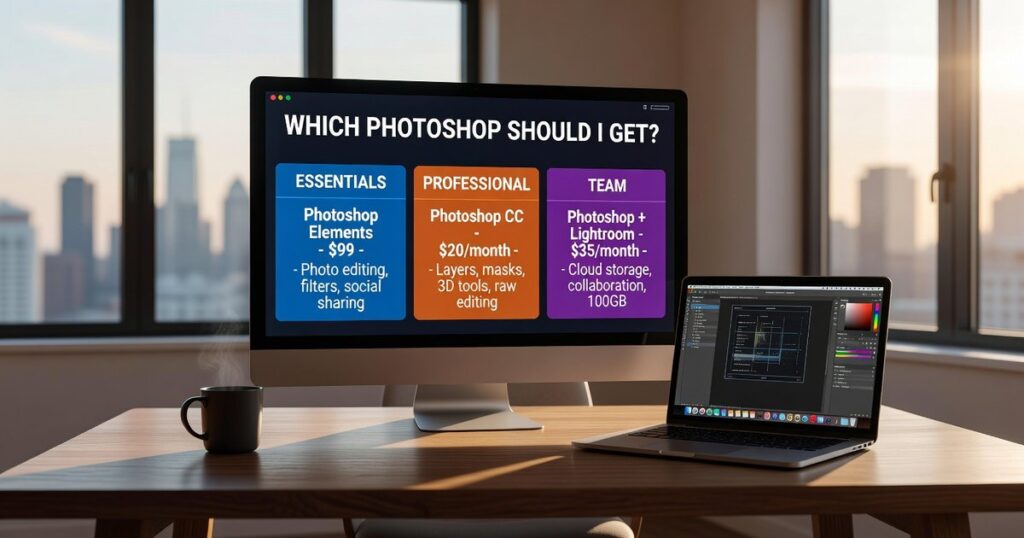
I get asked “which Photoshop should I get” almost every week.
Here’s the thing: most people don’t actually need Photoshop. They just think they do because everyone calls image editing “photoshopping.”
which photoshop should i get gfxprojectality
You’re probably here because you want to create something. Maybe it’s a logo. Maybe it’s social media graphics. Or you’re building a website and need to design the interface.
The problem? Adobe has like six different products with “Photoshop” in the name. And then there are dozens of alternatives that might actually work better for what you’re trying to do.
I’ve spent years testing these tools on real projects. Not just opening them once and writing a review. Actually using them to build things people pay for.
This guide breaks down which software you actually need based on what you’re creating. I’ll show you when Photoshop makes sense and when you should look elsewhere.
We’ll cover budget too. Because not everyone has $55 a month to spend on Adobe’s subscription.
You’ll learn which tool fits your project type, your skill level, and your wallet. No fluff about features you’ll never use.
Let’s figure out what you actually need.
Decoding the Adobe Ecosystem: It’s More Than Just ‘Photoshop’
You’ve probably said “I need Photoshop” when what you really meant was “I need to edit an image.”
I did the same thing for years.
But here’s what most people don’t realize. Adobe makes several tools that all do different things. Picking the wrong one means you’ll either overpay or struggle with software that wasn’t built for what you’re trying to do.
Let me break this down.
Adobe Photoshop CC is the full version. It’s what professionals use for photo editing, digital painting, and serious image work. You get every tool Adobe has ever built for raster graphics (that’s pixel-based images). The catch? It’s subscription-only and costs about $20 a month.
My recommendation: Only get this if you’re working professionally or need features like advanced layer compositing and color correction. Most people don’t.
Adobe Photoshop Elements is the budget-friendly option. One-time payment of around $100. You get solid photo editing tools without the complexity or the monthly bill. It’s perfect for hobbyists who want to fix photos and create basic graphics.
If you’re wondering which photoshop should i get gfxprojectality, start here. You can always upgrade later if you outgrow it.
Now here’s where people get confused.
Adobe Illustrator isn’t Photoshop at all. It’s for vector graphics (think logos and icons that need to scale infinitely without getting blurry). If you’re designing a logo or creating illustrations, you want Illustrator. Not Photoshop.
Adobe Express is the newcomer. Free version available. It’s built for quick social media posts and simple videos using templates. No design skills needed.
My advice? If you’re just starting out, try Express first. It’s free and you’ll know pretty fast if you need something more powerful.
The Core Concept: Raster vs. Vector in Graphic Design
Let me break this down.
Raster graphics are made of pixels. Think of them like a mosaic. Each tiny square holds a color and when you zoom in far enough, you see those individual pieces.
They’re great for photos and anything that needs rich detail. Color blending? Photorealism? That’s where raster shines. Photoshop owns this space.
But here’s the catch. Scale a raster image up and it falls apart. Those pixels get stretched and you end up with a blurry mess.
Vector graphics work differently. They’re built on math. Points, paths, and curves defined by equations (which photoshop should i get gfxprojectality covers in detail if you’re choosing tools). For those delving into the intricate world of vector graphics, understanding concepts like Gfxprojectality can greatly enhance your selection of the right design tools, especially when considering how Photoshop approaches the mathematical foundations of points, paths, and curves.
Think of vectors like a blueprint. The instructions stay the same no matter the size. You can scale a vector logo from a business card to a billboard and it stays crisp.
Illustrator and Figma live in the vector world. Smaller file sizes and clean lines are their thing.
The tradeoff? Vectors can’t handle photorealistic detail the way rasters can.
So which one matters for your project?
Say you’re making a poster. Edit the background photo in Photoshop. That’s raster work. But create the logo in Illustrator or Affinity Designer. That’s vector.
Use the right tool for the job and you’ll save yourself hours of frustration.
Top Photoshop Alternatives for Every Type of Designer
Here’s what nobody tells you about Photoshop alternatives.
Everyone acts like you need to find the “one true replacement” that does everything Photoshop does. That’s backwards thinking.
The truth? Photoshop is bloated for most design work. You’re paying for features you’ll never touch.
I’m going to show you tools that actually match how you work. Not some mythical designer who does everything from photo retouching to UI design to print layout.
For the Professional on a Budget: Affinity Photo
You pay once. That’s it.
No subscription. No monthly drain on your bank account. Affinity Photo costs less than two months of Photoshop and you own it forever.
But here’s what matters more. It handles raster editing like a pro tool should. Layer masks, adjustment layers, frequency separation. It’s all there.
The real win? It works seamlessly with Affinity Designer and Publisher. You can move between raster, vector, and layout work without switching ecosystems.
For the UI/UX and Web Designer: Figma & Sketch
Most designers still think they need Photoshop for web work. They don’t.
Figma and Sketch are vector-based. That means your designs scale perfectly and your files stay small. (Try emailing a 500MB PSD to a client sometime.)
Figma lets your whole team edit simultaneously. No more version control nightmares. No more “finalfinalv3_ACTUAL.psd” files cluttering your desktop.
Sketch owns the Mac design space for good reason. Its component libraries alone will save you hours every week.
Neither tool tries to be Photoshop. That’s exactly why they’re better for interface design.
For the Open-Source Enthusiast: GIMP
GIMP gets a bad rap for its interface. Fair enough. It’s not pretty.
But if you’re willing to spend a weekend learning it, you get professional-grade editing for zero dollars. Not a trial. Not a limited version. The whole thing.
It handles layers, masks, and channels just like Photoshop. The tools have different names but the concepts are identical.
The learning curve is real though. I won’t sugarcoat that.
For Quick Browser-Based Editing: Canva & Photopea
These two get lumped together constantly. They shouldn’t be.
Canva is for people who need designs fast. Social media posts, presentations, quick graphics. It’s template-driven and that’s the point. You’re not doing pixel-perfect retouching here. For those seeking a seamless blend of efficiency and creativity in their design process, the Gfxprojectality Latest Tech by Gfxmaker offers innovative tools that elevate the speed and quality of graphic creation, much like Canva does for rapid social media content.
Photopea is different. It’s basically Photoshop running in your browser. Same layer system, same blend modes, same keyboard shortcuts. (I’ve used it to edit PSDs on library computers when I forgot my laptop.)
If you’re wondering which Photoshop should I get gfxprojectality, consider this first. Maybe you don’t need Photoshop at all.
Pick the tool that matches your actual work. Not the one everyone says you’re supposed to use.
A Practical Framework for Making Your Decision
You know what drives me crazy?
When someone asks which Photoshop they should get and the answer is always “it depends.” Yeah, no kidding it depends. But on what exactly?
That vague advice helps nobody.
I’ve watched people waste months bouncing between software because they never took the time to figure out what they actually needed. They download trials, watch tutorials, then start over with something else.
It’s exhausting.
So let me give you a framework that actually works. Four steps that’ll point you in the right direction without all the guesswork.
Step 1: Define Your Primary Projects
What are you actually making? Photos that need editing? Logos? Website mockups? Social media graphics?
Match your project type to the right category. Raster for photos. Vector for logos. Template tools for quick social posts.
Seems obvious but most people skip this part.
Step 2: Assess Your Budget
Can you handle a monthly subscription like Adobe CC? Would you rather pay once and be done with it like Affinity? Or do you need free options like GIMP or Photopea?
Money matters. Don’t pretend it doesn’t.
Step 3: Be Honest About Your Skill Level
Are you just starting out? Then simpler interfaces like Photoshop Elements or Canva make sense. Already a pro who needs every feature? Photoshop CC or Affinity Photo won’t slow you down.
The worst thing you can do is grab professional software when you’re still learning basics. (You’ll spend more time frustrated than creating.)
Step 4: Consider Your Workflow
Do you work with a team or fly solo? Cloud tools like Figma and Canva shine for collaboration. Desktop apps like Photoshop and Affinity work better for offline solo projects.
If you’re still wondering which photoshop should i get gfxprojectality, run through these four steps first. Your answer is in there somewhere.
And if you want to dive deeper into what’s happening in design software right now, check out gfxprojectality latest tech by gfxmaker for the latest updates. For an insightful exploration of cutting-edge innovations in design software, be sure to explore the Gfxprojectality Tech Trends From Gfxmaker, which highlight the latest advancements shaping the industry.
The right tool isn’t the one everyone else uses. It’s the one that fits how you actually work.
The Best Software is the One That Fits You
You now know what Photoshop is and which version works for your projects.
I get it. Staring at dozens of powerful tools can freeze you in place. You want to start creating but you’re stuck comparing features and price tags.
Here’s the thing: you don’t need the most expensive option. You need the right one.
Use the framework I showed you. Look at your projects. Check your budget. Be honest about your skill level. That’s how you pick software that helps you create instead of getting in your way.
which photoshop should i get gfxprojectality has walked you through every option that matters.
Don’t sit on this. Pick the tool that matches your needs and start a free trial today. Download it and open your next project.
The software that fits you is the one you’ll actually use. Homepage. Gfxprojectality Tech Trends From Gfxmaker.